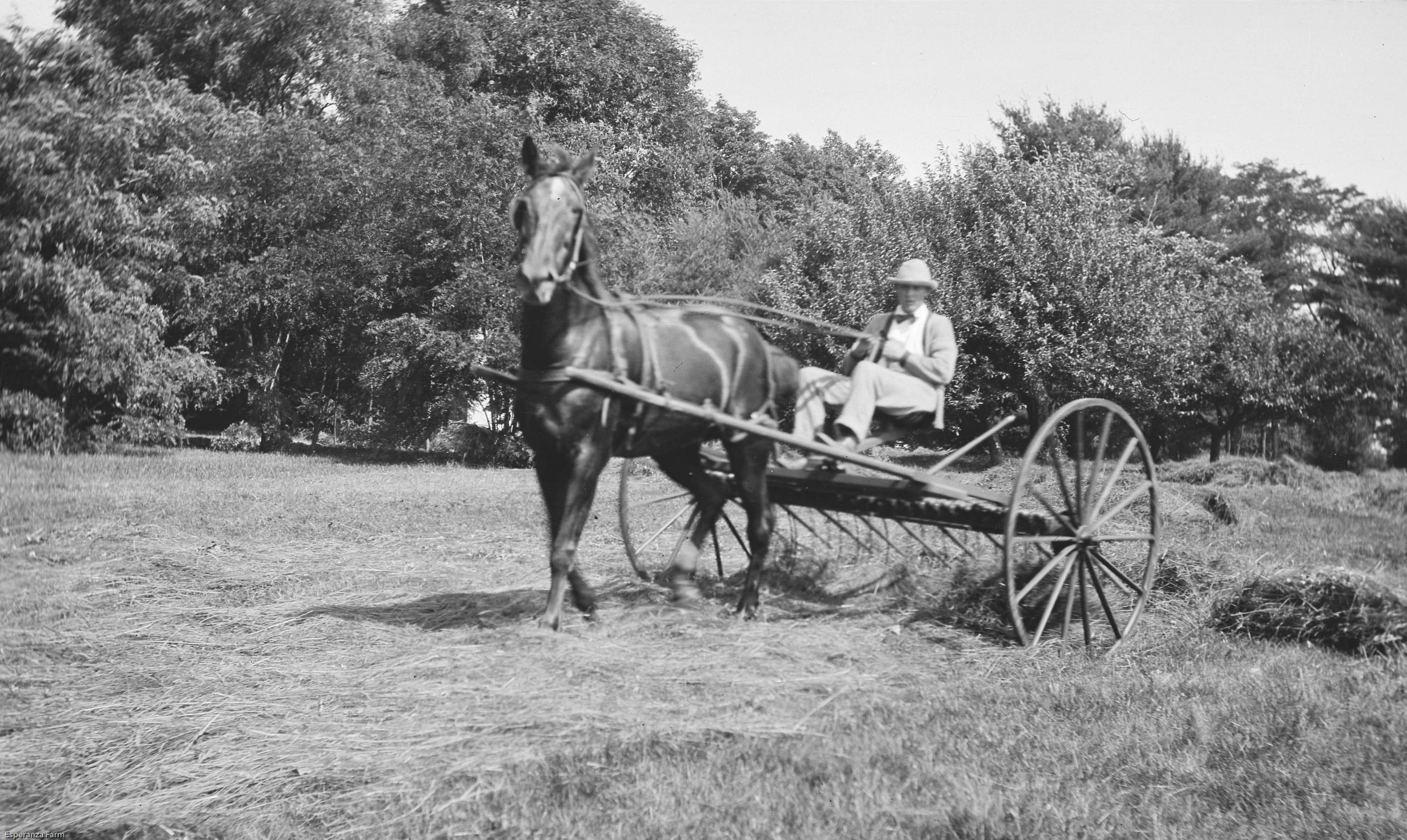
Tedding hay 1911
Esperanza has always produced hay, for most of its history it was for its own use. The picture above was probably takn of a second cutting of hay. I don’t know who is driving the horse, but I do know that the horse is Kentucky Chief, one of a matched pair of medium weight driving horses. He would have been well suited to handling a light tedder and would have been much faster than using one of the Percherons, who would have been used to bring the hay in. The farm also had a team of oxen.
Today I take 75 bales and the rest is taken by the farmer who cuts it. That the field has a reputation for being the best in town is a source of pride. (even if the competition is small these days) The field easily breaks a 1000 (est. at 50lb bale, much less when he does round bales) a year, which isn’t bad since only 12 acres are in hay at the moment.
There is always a way to these things. The first cutting traditionally comes in early June, Belmont weekend when the grass turns from silver to gold. Really, the color changes when the wind bends the grass, gold is fully mature seed heads. Brown is too late. Most years, this one was no different, this is the worrisome cutting. The larger and more valuable of the two, it comes at a time of year prone to uncertain weather. It is also the cutting, because of the tall grass height and seed heads, that is more easily ruined. Because it is higher quality grass it is generally considered horse hay, but this also increases the risk for horse hay must be dry. Hail storms beating the grass down before it is cut, rain when it is down can turn it from 6 dollar horse hay to 2 dollar construction hay.
The second cutting happens any time from mid August to before the frost, so end of September. This period has more predictable weather. The cutting is smaller often half the size, unless the summer has had lots of rain, and easier to handle.

- Hay tedder 2011
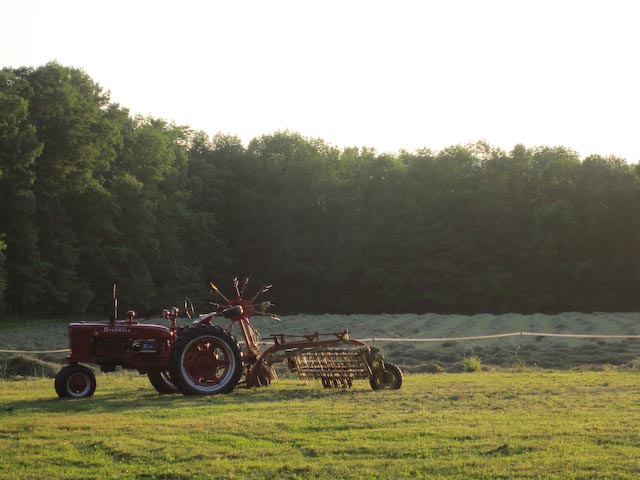
This picture was taken in June. You can tell by the size of the windrows that this is a first cutting. While the tractor qualifies as an antique, and has another career at tractor shows, the rakes are more modern and of a typical size for New England haying equipment today. Like all farm machinery they are elegant, functional and lethal.

